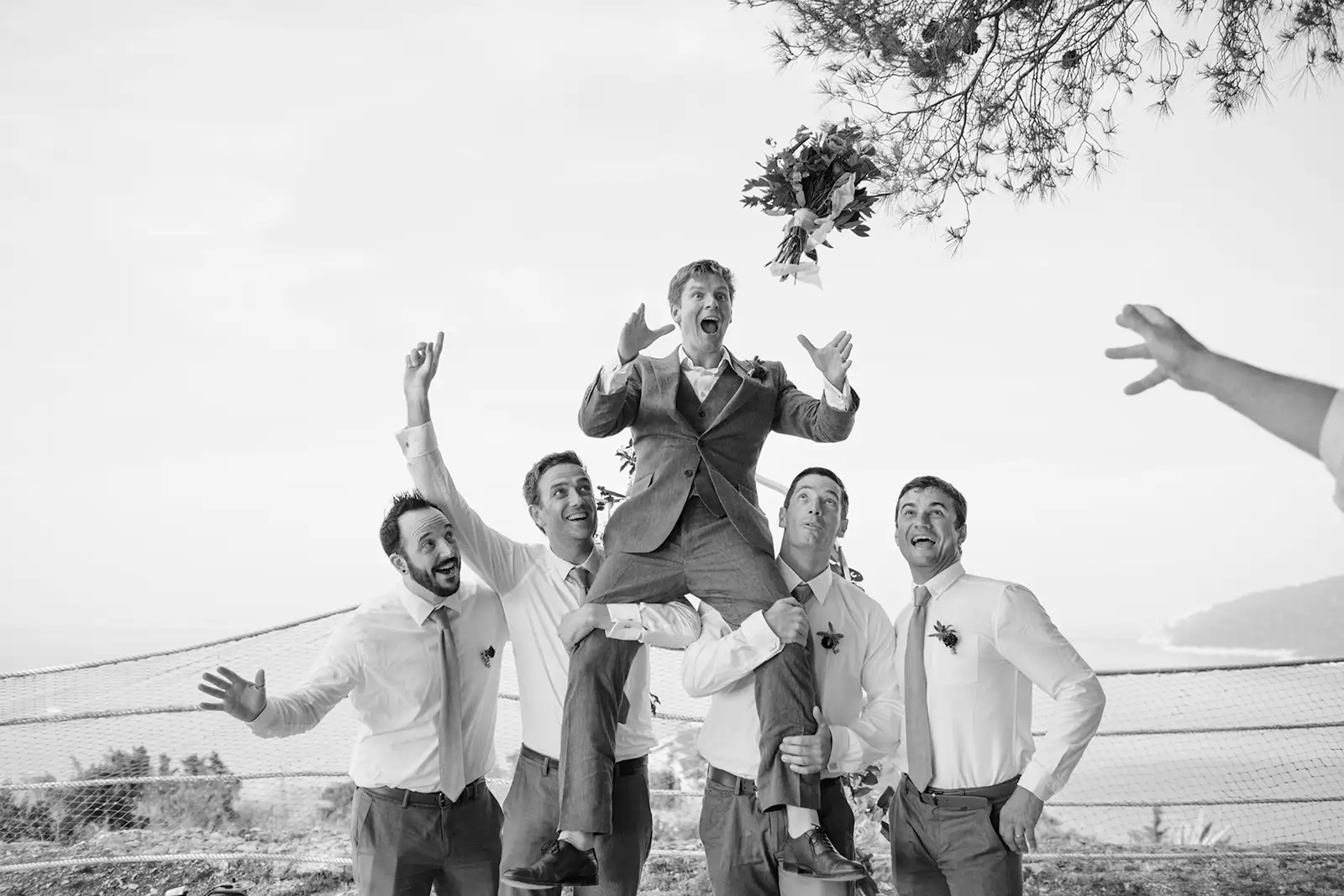
They are the kind of people who do not hand decisions to convenience. A wedding on Vis asks for a ferry and a reason to take it, and they chose the island anyway, then brought a full crew along, as if commitment is a thing you do best with witnesses and a shared itinerary. The island answers in its own register once you land: pine shade, limestone, open water, a pace that takes the urgency out of even a loud group.
By midday the pool had quietly become the agenda. One of them had decided the water was the only reasonable place to be; the other was in no hurry to argue, glass in hand on the warm stone. Nobody was saving anything for later, and the morning had already made its case.

Fort George holds a ceremony the way the island holds everything: steadily, without insisting on it. Pines overhead, the Adriatic on three sides, gravel underfoot. The fort does not ask to be noticed, which is exactly why the vows land. What follows, back up the gravel through the confetti, is a small crowd refusing to let go of two people for one more second.
The cake arrives as a clean interruption, carried through the dark with the sparklers doing the announcing. They cut it together; a small dog figurine keeps watch at the base. Then the table reclaims them, and the celebration stops keeping its voice down.
The day after belongs to the water. A white gulet pulls the town away behind the rail and noses into open sea. At an abandoned submarine pen the question turns plainly physical: the drop to the water is real, the edge is concrete, and the only thing voluntary about it is whether you go. They went. By the end of the light the deck has become a dance floor, the full moon has taken its place beside the mast, and the lights of Vis town are laid out across the water like the island is seeing them off.