The surfboards were wet twice before anyone reached for the wedding clothes. That order tells you most of what you need to know: this was a week on the water that happened to hold a wedding, and the gear for the rest of the days outranked the schedule for the afternoon. Vis was the bride's island first — a Croatian limestone she had carried as memory and described well enough to settle the question of where, long before the question of which venue came up. He agreed to the island before he had seen the coast.
The morning starts in a room that was made ready before the first guest woke. A gold urn holds down a glass table, ballast for roses, clematis and greenery that wants to climb out of it. Silk ribbons, vintage scissors, programmes pinned to the stone — the planner left soft, deliberate marks for a group that had spent the week closer to the sea than to any mirror.
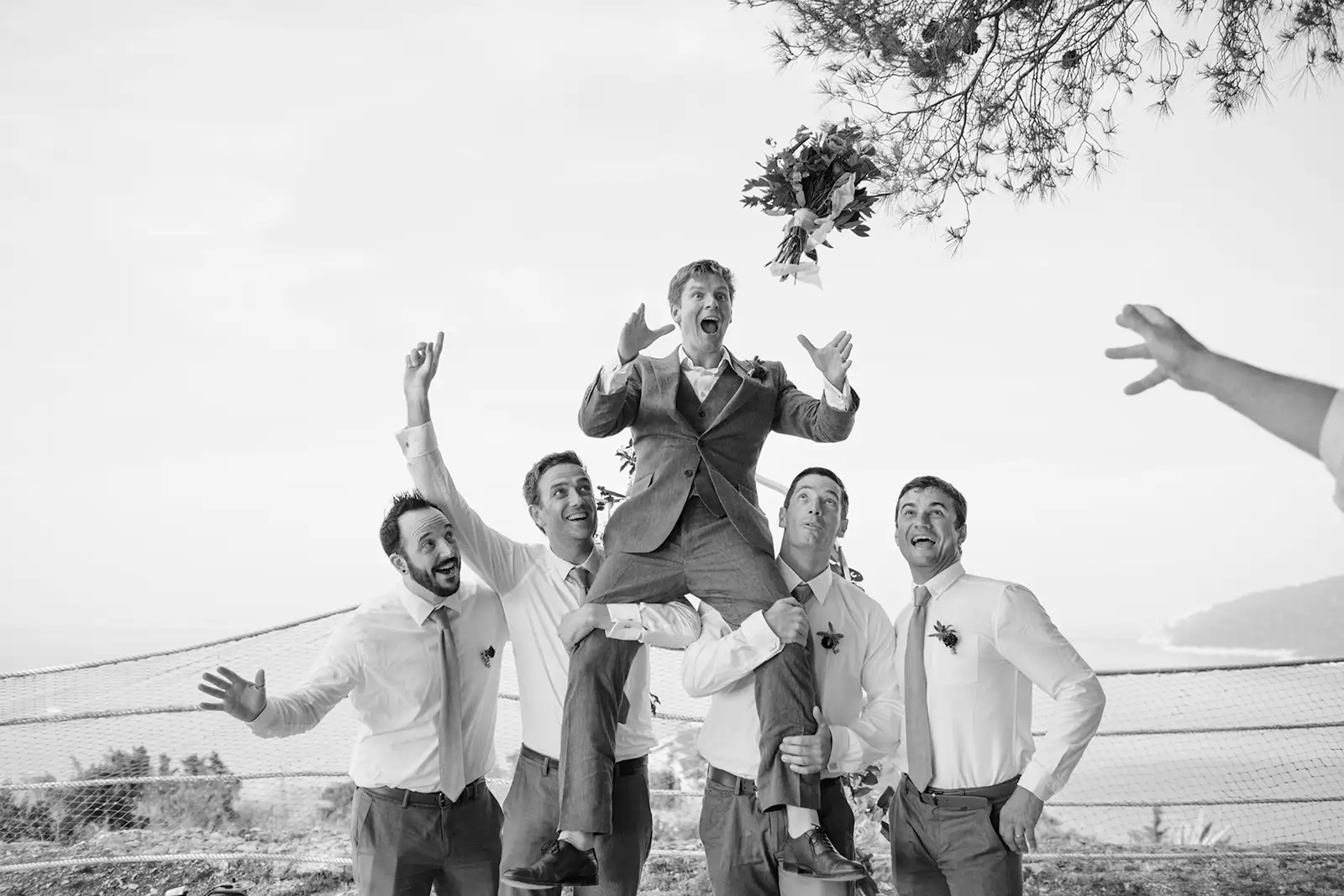
The bridesmaids reach the terrace in taupe, hems dragging the sandy ground of a fort the British army raised in 1812. There is an earned, quiet joke in a British couple marrying inside a fort the British built to hold Napoleon off — two centuries on, the only thing under defence is a cocktail hour. The fort takes no notice. Its stone has met louder British arrivals than this one.
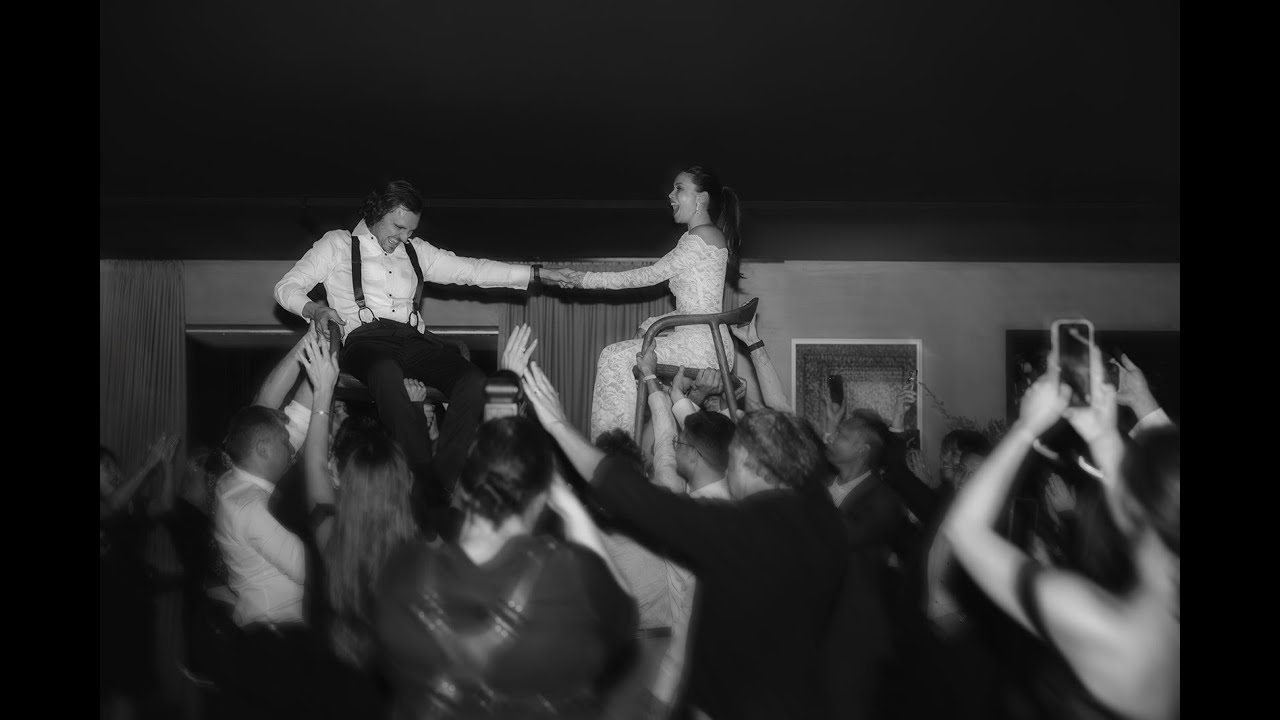
By night the sun is gone and large white globe lanterns hang in its place. The room has pulled tight around the dance floor — guests on wine barrels, on wooden-crate seating, a ring with no edge left open. A Fort George wedding has one rule for the photographer: join the room or leave it. A floor this close cannot be worked from outside it. So the camera goes round the neck, a drink takes the free hand, and the photographer becomes one more body inside the ring. The film holds the rest.