The couple came from Denmark, but the relationship had no single address. They had built it across roughly forty countries, the way some people build a life out of one house and a mortgage. For a thing assembled in that many places, the question is where you finally set it down. They chose a stone village in Istria in early autumn, when the light goes long and the heat lets go, and said it once. When we arrived the guests had taken the pool, unhurried, and the decorators were already moving through the ceremony space without fuss. A wedding that travels that far tends to want stillness at the end of it.
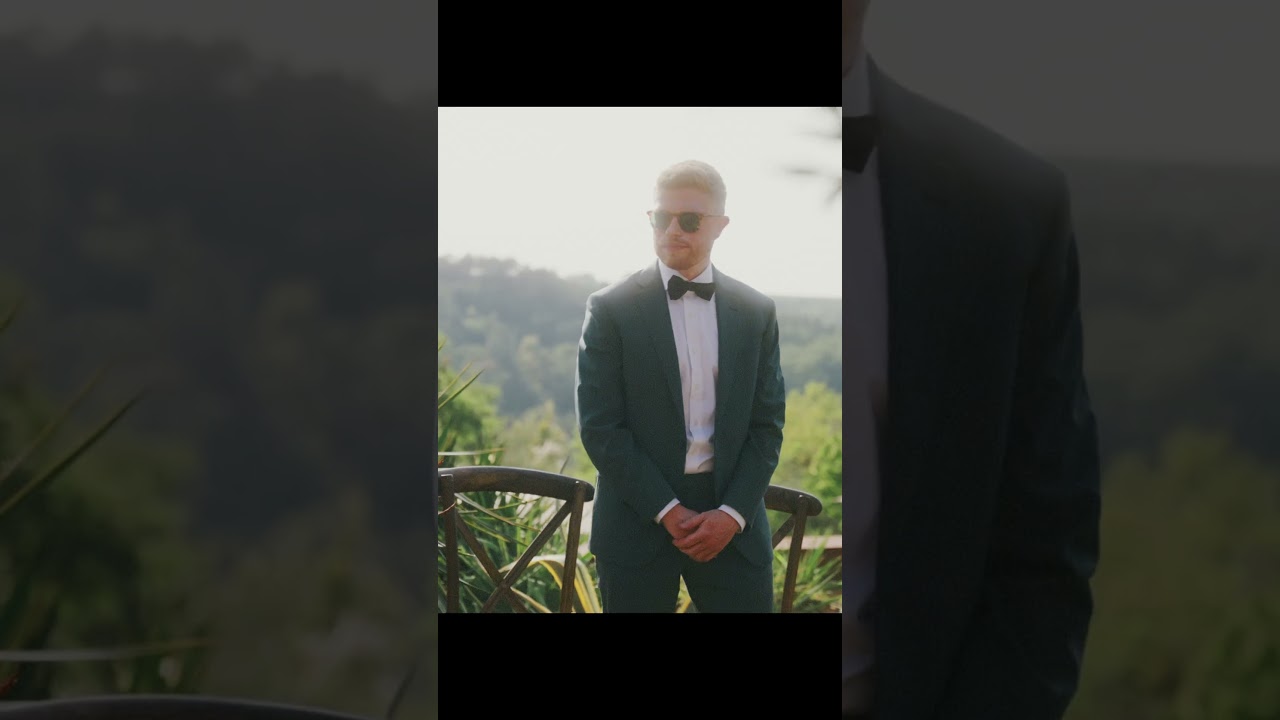
The bride had decided early that the dress would not compete with anything. Sleeveless, a deep V, a bodice cut clean enough to carry the day on its own — gold worn light, hair left to fall. The one note of warmth she allowed herself was the bouquet, peach and orange against all that restraint. The groom answered it in a teal suit, which is a quieter risk than it sounds and the kind a man makes when he is sure of the room he is walking into.
The flowers refused the wedding palette entirely. Terracotta, coral, muted red, pampas and protea dried rather than fresh, anthurium and olive greenery — the colors of an Istrian autumn rather than a florist's spring, set hard against the stone so the season and the building agreed with each other. The outdoor ceremony at San Canzian stayed quiet the whole way through, the kind of quiet a place earns rather than asks for.
After sundown, while the sky still kept its blue, San Canzian shifts. The lights come up and the village turns from a daytime place into a held one — refined indoors, almost unreasonable outside, and the whole party kept inside a single set of walls. That last part is the case for it. Nobody drives anywhere. Everyone stays where the night is happening, which is exactly what a couple from everywhere came all this way to stop doing.

